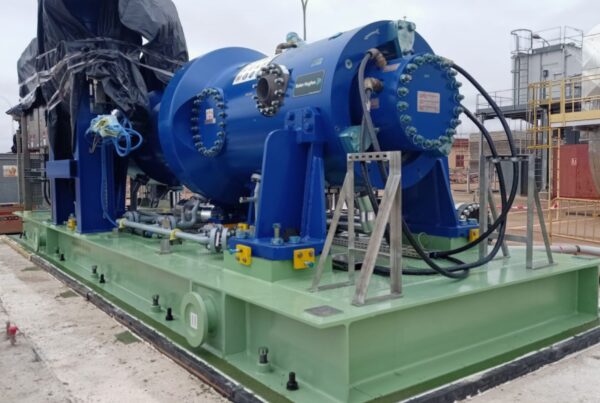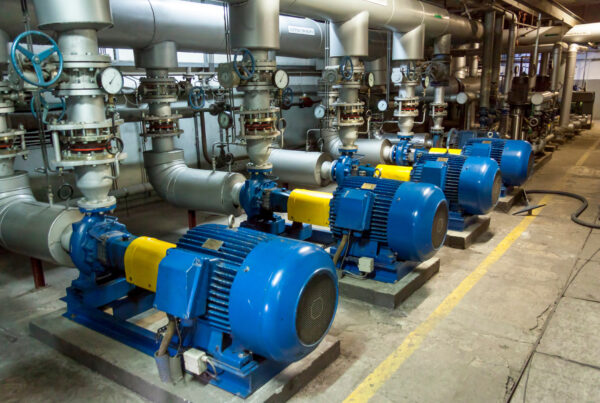
Anchor bolt failure is one of the more common and more preventable, causes of machinery foundation problems in heavy industrial facilities. When anchor bolts loosen, corrode, or fail to develop adequate load, the result is loss of machine stability, rising vibration levels, and accelerated wear on bearings and seals.
Chemical anchoring addresses this directly. By using an epoxy resin or adhesive to bond the anchor to the concrete substrate, chemical anchors develop higher pull-out strength than mechanically-set alternatives, perform in substrates that mechanical anchors cannot, and are not subject to the torque loss and loosening that affects conventional bolted connections under dynamic loading.
This article explains what chemical anchoring is, when it is the correct specification, and how it compares to traditional anchor bolt installation for rotating and reciprocating equipment foundations.
What Is Chemical Anchoring?
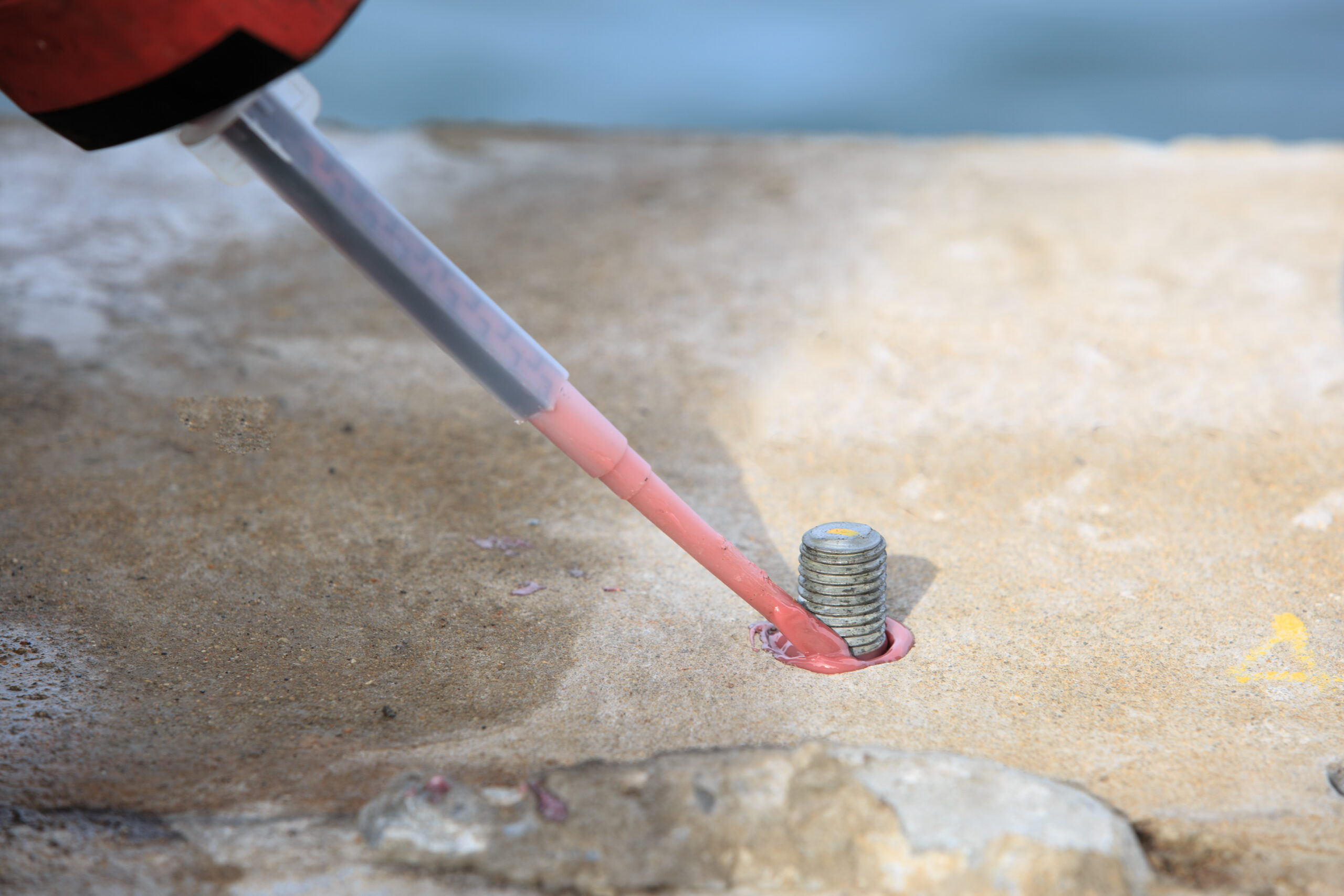
Chemical anchoring uses an epoxy resin or structural adhesive injected into a pre-drilled hole in concrete or masonry. The anchor rod or bolt is set into the resin before it cures. As the resin hardens, it bonds the anchor to the substrate along the full depth of the embedment, distributing load across the bore surface rather than relying on mechanical friction or expansion.
The result is a bonded connection that resists pull-out through adhesion and mechanical interlock with the concrete substrate rather than through clamping force alone. This makes chemical anchors suitable for applications where mechanical anchors are not — including cracked or weakened concrete, close edge distances, and high-load dynamic applications such as reciprocating compressor foundations.
When Chemical Anchoring Is the Correct Specification
Chemical anchoring is appropriate in several specific situations that arise in heavy industrial foundation work.
Cracked or compromised concrete substrates
Mechanical anchors rely on the integrity of the surrounding concrete to develop clamping force. In cracked or aged foundations — common in facilities where the original concrete was not designed for the dynamic loads now imposed — mechanical anchors underperform. Chemical anchors bond to the substrate along the full bore depth and can develop adequate load capacity in substrates where mechanical anchors cannot.
Anchor bolt replacement during foundation rehabilitation
Where anchor bolts have failed, corroded, or require replacement during a foundation rehabilitation project, chemical anchoring is frequently the practical solution. New anchor locations can be established without the need to break out and reconstruct the entire foundation block, reducing scope, cost, and plant downtime significantly.
High-load dynamic applications
Reciprocating compressors, large diesel generators, and heavy processing equipment impose sustained cyclic loading on anchor bolts that conventional mechanical anchors are not well suited to. Chemical anchors, properly specified and installed, resist vibration-induced loosening more effectively and maintain clamping force over the service life of the installation.
Chemical Anchoring Compared to Traditional Anchor Bolts
Traditional cast-in anchor bolts, set in concrete during the original foundation pour, remain the standard for new installations where the foundation is being designed and constructed to suit the equipment. They provide reliable performance when correctly specified, torqued, and maintained.
Chemical anchoring becomes the preferred option in three circumstances: where the original anchor bolts have failed and cannot be restored; where foundation rehabilitation requires relocation of anchor points; or where the substrate condition makes mechanical anchor performance unreliable.
The key practical differences are:
- Chemical anchors develop load through adhesion along the full bore depth. Traditional bolts develop load through clamping force and friction.
- Chemical anchors perform in cracked and weakened concrete. Mechanical anchors require sound substrate to develop rated load.
- Chemical anchors are less susceptible to vibration-induced loosening. Mechanical bolts require periodic re-torquing in dynamic applications.
- Chemical anchoring requires thorough hole preparation and strict adherence to cure time before loading. Incorrect installation eliminates the performance advantage.
Installation Requirements
The performance of a chemical anchor is entirely dependent on correct installation. Three factors are critical.
Hole preparation
The bore must be drilled to the correct diameter and depth, then cleaned thoroughly — typically by brushing and blowing to remove dust and debris. Concrete dust in an uncleaned hole significantly reduces bond strength. For critical applications, compressed air cleaning followed by brushing and a second air clean is standard.
Resin injection and anchor setting
Resin is injected from the bottom of the hole upwards to avoid air pockets. The anchor rod is inserted with a slow rotating motion to ensure full resin distribution along the bore. The anchor must be held in position until the resin has developed sufficient early strength to resist movement.
Cure time before loading
Chemical anchors must not be loaded until the resin has fully cured. Cure time varies with ambient temperature — lower temperatures extend cure time significantly. Loading before full cure is reached is one of the most common causes of premature chemical anchor failure. Temperature and cure time data from the product data sheet must be observed.
Chemical Anchoring as Part of Foundation Rehabilitation
Chemical anchoring is rarely a standalone intervention. In most foundation rehabilitation projects, anchor bolt replacement is carried out alongside foundation re-grouting and equipment re-alignment, addressing all three elements of foundation integrity in a single planned maintenance window.
Alphatec Engineering provides anchor bolt repair and replacement services as part of its foundation rehabilitation scope, including assessment of existing anchor condition, specification of replacement anchor type and embedment depth, chemical anchor installation, and post-installation load verification. This is combined with epoxy grout re-grouting and precision alignment where required.
For maintenance managers planning a foundation rehabilitation on reciprocating compressors, diesel generators, turbines, or pumps, technical consultation on anchor bolt condition and replacement options is available ahead of project commitment.
Request a Technical Consultation
If anchor bolt condition or chemical anchoring specification is relevant to an upcoming maintenance or rehabilitation project, Alphatec’s engineering team can provide guidance on product selection, embedment depth, and installation requirements. Contact us to discuss your project requirements.